Showing posts with label writing life. Show all posts

Wednesday, March 28, 2012

Do you sound like a writer?

This week I'm sharing good words on writing from others. Today's wisdom comes from George Orwell. In his 1946 essay 'Politics and the English Language,' he criticized the bad habits of many writers and promoted the use of clear language.

In that essay, Orwell provided the following list of rules for writers.

  1. Never use a metaphor, simile, or other figure of speech which you are used to seeing in print.
  2. Never use a long word where a short one will do.
  3. If it is possible to cut a word out, always cut it out.
  4. Never use the passive where you can use the active.
  5. Never use a foreign phrase, a scientific word, or a jargon word if you can think of an everyday English equivalent.
  6. Break any of these rules sooner than say anything outright barbarous.

Some people I meet at book events say they hesitate to write because they believe they won't 'sound like a writer.' They seem to believe writers are imbued with some magic vocabulary and generally that vocabulary isn't found in everyday language.

Simple words in clearly stated sentences can have greater impact and connect more readily with readers. Readers understand simple and clear. Readers relate to simple and clear.  At the same time, simple words in clearly stated sentences doesn't mean writing has to be trite. See Rule 1.

Good advice when Orwell wrote these rules in 1946. Good advice 66 years later.

Thanks, George Orwell!

Monday, March 26, 2012

"When you can't create, you can work"

How do you write? Do you have a system for writing? Someone asks these questions almost every time I speak. As though there might be a magic formula.  As though if you do just the right things in just the right order, words will flow out of your fingertips. Don't I wish!

I came across the 11 Commandments of Writing and Creative Routine --words of writing wisdom from Henry Miller, written in 1932-33 when he was working on his first novel, Tropic of Cancer. Apparently he was struggling with the same challenges all of us writers face.

HENRY MILLER'S COMMANDMENTS
  1. Work on one thing at a time until finished.
  2. Start no more new books, add no more new material to ‘Black Spring.’
  3. Don’t be nervous. Work calmly, joyously, recklessly on whatever is in hand.
  4. Work according to Program and not according to mood. Stop at the appointed time!
  5. When you can’t create you can work.
  6. Cement a little every day, rather than add new fertilizers.
  7. Keep human! See people, go places, drink if you feel like it.
  8. Don’t be a draught-horse! Work with pleasure only.
  9. Discard the Program when you feel like it—but go back to it next day. Concentrate. Narrow down. Exclude.
  10. Forget the books you want to write. Think only of the book you are writing.
  11. Write first and always. Painting, music, friends, cinema, all these come afterwards.
Miller's advice is to himself is practical and realistic. It recognizes creativity and how the pleasure can be encouraged or lost.

The commandment that resonates most with me at the moment is #5 - When you can't create, you can work. I write new material in the morning. When my creative energy lags--as it does around 3 every afternoon--then I can edit, work on my website, Tweet, add to a marketing plan. In other words, there are many ways to be productive. And success often comes from keeping at it.

 Thanks Henry Miller!

Wednesday, May 11, 2011

The talk of the town


Massa Macinaia, Italy, is no different than Preston, Iowa – at least in one respect. People notice newcomers. Who are they? What are they doing here? How long will they stay?

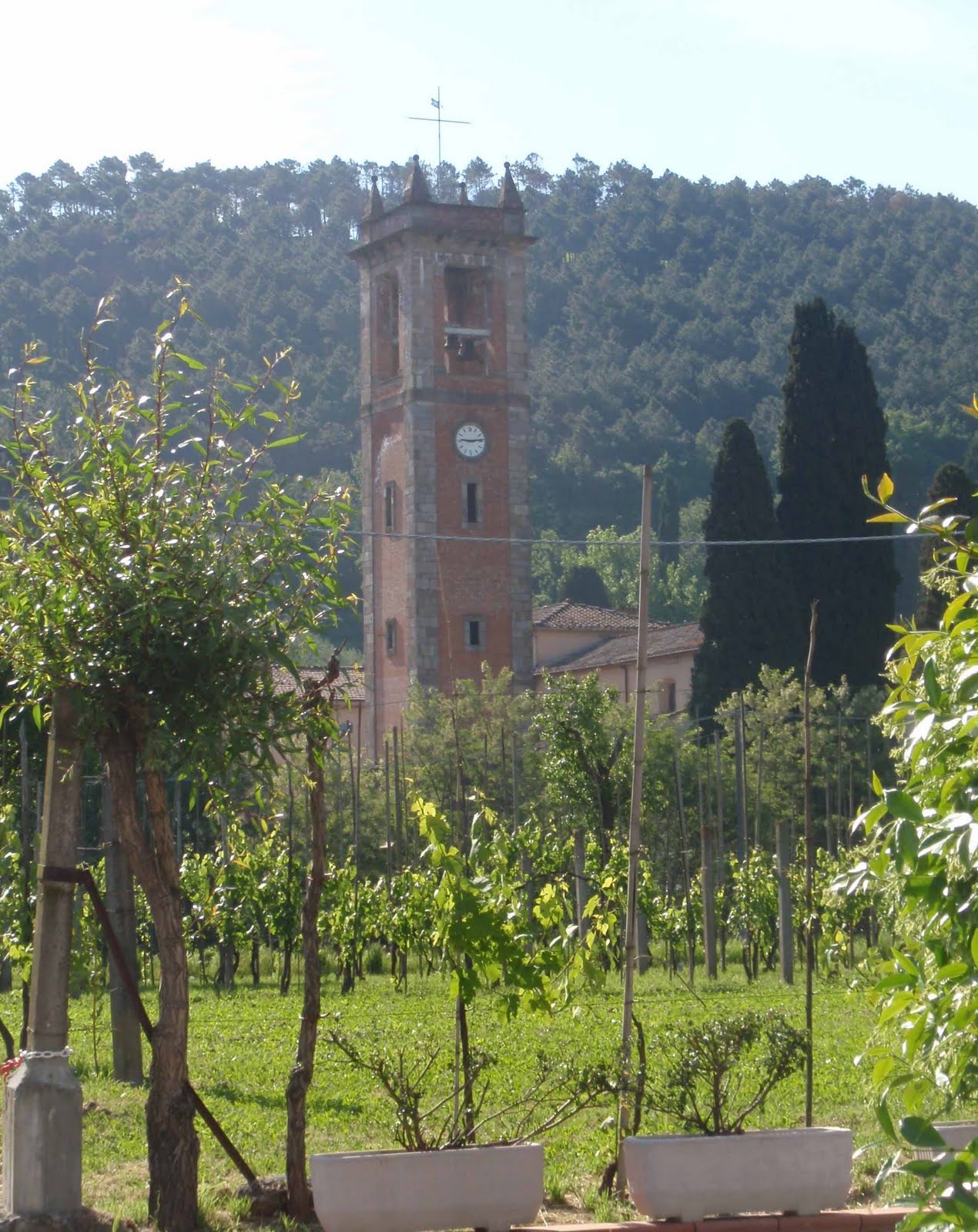
Mary and I stick out, for sure. We carry our cameras and stop anywhere and everywhere to take photos – street signs, flowers growing out stones, church towers, cemeteries.

Like most of us, these folks may not realize how beautiful their hometown is, especially to new eyes. Of course our limited grasp of Italian is immediately obvious. We use every word we know and many that we don’t, but we’re trying. We pick up new vocabulary daily, by reading signs and figuring out meaning from context. We also have Mary’s handy iPhone with Google Translate.

But most of all, we stick out as the two women who came to write. We hauled a table out under a tree in the garden and sit for hours each day staring at the screens, typing away. We see our neighbors watching us from their upstairs windows.  They look at us as though we’re exotic animals – you came all the way to Italy … to write?

I hope they also notice I stare just as often at the Tuscan hills terraced with olive trees and vineyards and that either one of us may look up at any moment and exclaim, “Is the most beautiful place you’ve ever seen?” They can’t see it, but I wish they also knew I relax, rejuvenate and am inspired by sitting under the Tuscan sun, breathing in country air, absorbing this beauty.

I am beginning to recognize our neighbors. This morning a woman we saw at the deli the first day we were here called out ‘Buon giorno!’ as we passed her home.

Our neighbor across the street knows we are studying Italian and he is helping by cheerfully and enthusiastically refusing to speak a word of English to us. He also shared his newspaper.

Our landlord seems a little anxious we won’t really see Italy. When he came to adjust the seats on our bicycles, he said we should go to Pisa and Florence. Having heard that we write, write, write, he may have thought we intended never to leave our yard. We will put him at ease.

Tomorrow morning: Lucca. There we will check out the trains. This week, we’re giving locals something to talk about.

Next week? Maybe we’ll be natives.

Ciao!

Wednesday, January 27, 2010

7 things I've learned


 Reflecting on the past - looking to the future. It's a January sort of thing. So join me as I think about the 7 Things I've Learned in my writing life to date.

1. Good support is invaluable - I lucked into an excellent writing group from the get go.  The four of us had been in many of the same writing workshops, so we knew each other and we shared an understanding and vocabulary for critiquing. We knew each other well enough to be kind but honest in giving feedback.

2. Have a thick skin and an open mind – When you write, you’re putting yourself out there. Intellectually, mentally, emotionally. Those words are your babies; of course, they are great. Maybe to you. Not necessarily to the reader. Even with a writing group like mine – maybe especially so – it’s important to remember you won’t always like what you hear.  Like the time one of my writing buddies told me I had a real talent for writing erotica. Except I wasn’t writing erotica. Content. Tone. Timing. What I’d written was spot on and completely wrong at the same time. It took two weeks for me to get past those comments. To realize I had to start again and may as well be happy doing it.

3. Keep studying the craft – I’ve been writing and getting paid for it throughout my professional career. But there’s always something new to learn. The types and uses of prose styles. The strength of a well chosen metaphor. The power of ‘once.’ How less can be so much more. I suppose my writing is ‘good enough,’ but it’s delightful to learn one more thing and become exponentially better. Workshops at the University of Iowa and the University of Wisconsin and in Des Moines' basements led by experienced, insightful, kind leaders have brought my writing light years.

4. Inspiration and clarity come from walking – Inspiration can come from anywhere, but when I’m stuck on a plot development, when I can’t figure out motivation, when I’m just plain out of creativity, I will almost always find the answer in nature. Fresh air, a sunrise, the call of a bird, flowers in bloom – they perk me up. Somewhere at the end of mile three, it all seems so much clearer. I’m ready to get back at it.

5. Deadlines are necessary – I can dawdle with the best of them. More coffee? Sure! Time to load the washing machine? Might as well. Check e-mail? Every time it blips. If there are two weeks or two days, I’ll use every second. But give me a deadline and watch me focus. When I’m writing fast, I’m writing concisely, hitting the main points, no time for meandering. I get more writing, better writing, done when I have a deadline. So I have to create deadlines if I want to get writing out the door. And it helps when I have to face up to others with the copy.

6. Trust your gut – When my writing isn’t going well, I know it. The words don’t flow. A section just doesn’t feel right. Even when I sense a problem, I often hit ‘send’ and ship the work off to my writing group anyway.  Maybe it’s laziness on my part. Maybe insecurity. Maybe it's not really as bad as I think. That's what I hope, anyway. Invariably, my group points directly to the spots I perceived were problems. I’m learning to acknowledge that if I feel there’s a problem, there probably is. And that I need to do the hard work of fixing it before I send it to the group.

7. Shut up and write – I’ve been a fan since Natalie Goldberg wrote ‘shut up and write’ in her excellent book Writing Down the Bones. Research is not writing. Reading is not writing. Thinking is not writing. Only writing is writing. As some point, any real writer has to commit to chair and keyboard. For a few minutes. For a few hours. Apply the ‘butt glue’ and write. My best, most productive time is 9-noon. Commit to the time, establish a deadline, keep the door closed. Writing will follow.

**I 'borrowed' the idea of reflecting on my writing life so far by focusing on 7 things I've learned from Guide to Literary Agents